Offering the occasional “Huh. I never thought of it like that before.”
Subscribe for short reflections on life, death and what actually matters in between.
One short note every week or two. No pressure. No noise. Unsubscribe anytime.
Latest Thoughts
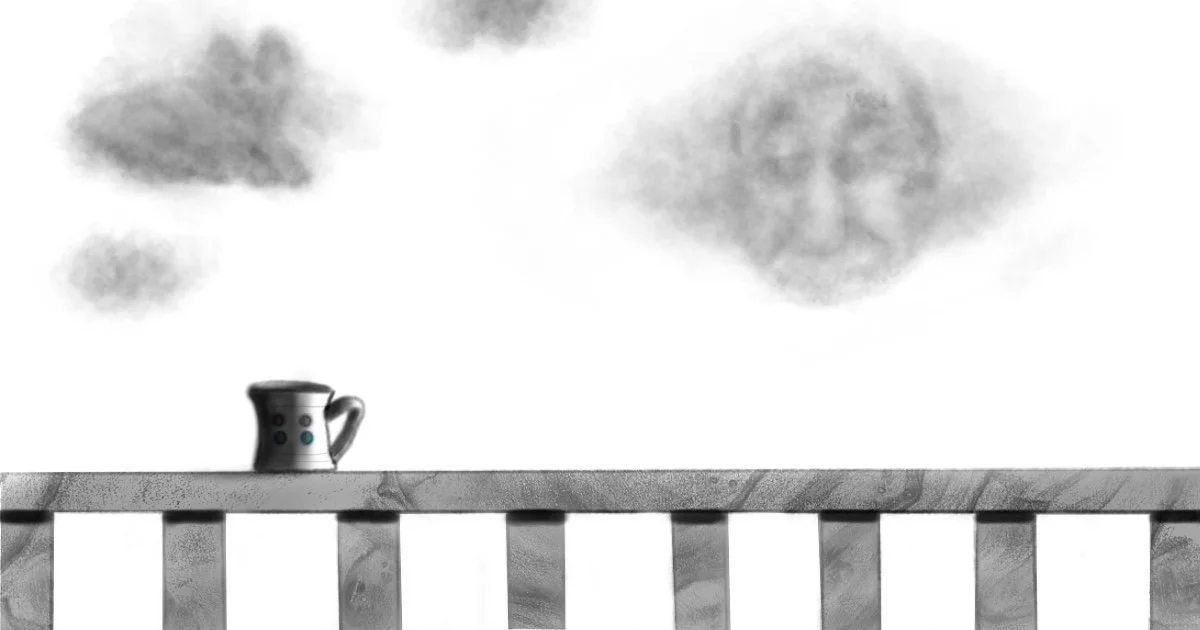
Rorschach - A Poetic Reflection on Perception, Reality and Imagination
A "word art" piece exploring the difference between base reality and perceived reality
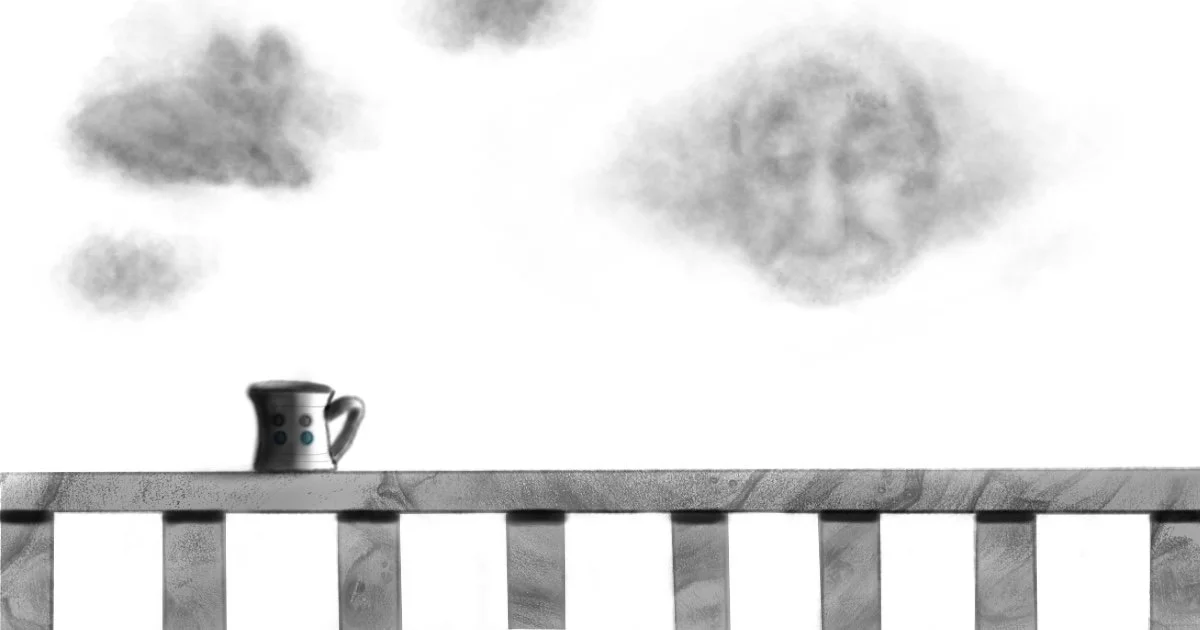
“What do you really see when you look up at all those clouds and their fun shapes?”
Sharing a poem today that I wrote back in 2024 as part of the Fire & Earth collection.
The poem is called “Rorschach”, and explores the difference between base reality and perceived reality.
We each see the world in our own way. Sometimes what we see and believe to be true are in fact figments of imagination that become augmented atop the real world.
Be careful not to skew the truth too much, at the cost of lying to not only others around you, but to yourself as well.
That said, also be careful not to limit your imagination. If you imagine something with vivid detail and consistent effort, then there’s a strong chance that you will manifest what you believe to be true into base reality.
Enjoy and let me know what you see. I’ll start to add more featured poetry into the weekly newsletter mix.
Thanks and love to all -
Rorschach
From Fire & Earth: A ThoughPose Poetry Collection | 3/17/2024
There aren’t even words
Anymore, just patterns
To pick out and rip apart,
Or subtle differences
That may tell small tales,
About where one starts
And the other ends
Passed out to interpret
As if a hidden meaning‘s
Name may be called
What do you really see
When you look up
At all those clouds
And their fun shapes?
Something tricking your
Brain to tell the truth
Break through derangement
All from some black marks
And the false premise
That anything can be known
If you linger on it long enough
Thoughts like tourist travelers,
Grouping up, passing by
And then splitting off again
The wings of a dead bat
The face of an old man
A pair of dancing bears
Spilled ink on white paper
One short note every week or two. No pressure. No noise. Unsubscribe anytime.

Biocentrism Says Existence Is a Matter of Perception
If you are not there to observe it, does it exist?

“Without consciousness, space and time are nothing.” - Robert Lanza
As maniac as this idea may seem, it stands as a relatively popular theory known as biocentrism, or the theory of everything. It’s the idea that consciousness is responsible for the existence of the universe, not the other way around as physics would have you believe.
As all that we know from physics continues to yield more questions than answers, medical doctor and scientist, Robert Lanza, has presented this new way to approach the “why?” question. His theory of everything places biology first, suggesting that the “web would not exist without the spider.” A shared consciousness, which kindles our collective web of all things known, is responsible and necessary for the existence of the universe and, without this shared consciousness, there would simply be nothing.
From a different angle, this notion could be explained by suggesting that things don’t exist unless you are there to observe them. This has been countlessly demonstrated by the famous double-slit experiment, in which entangled particles only present themselves as identifiable when they are observed. When they are not observed, they do not exhibit any unique properties within any specific orientation of space and time, but rather present themselves as a wave with infinite possibility across all of space and time.
Through physics, we’ve made significant progress in understanding the nature of our universe. Matter is studied as we track its motion and behaviors, and various physical theories are put to the test against the laws we’ve mostly come to accept. And while this scientific method can allot a certain level of confidence to its known facts about the nature of our universe, it must insist that no scientific fact be considered an absolute truth.
Even science admits that the very nature of truth is a matter of perception, and thus can never be absolute.
This fact - that there are no facts - also presents a problem for the theory of biocentrism, and it all comes down to the “truth” about space and time. Biocentrism regards both space and time as mental tools that we use collectively to form a frame of reference for our existence, rather than regarding them as physical objects that can be measured. If you can’t measure space or time, then you can’t prove that they exist, or that anything exists within their respective boundaries, including the theory of biocentrism.
It’s funny and ironic to think that nothing is true yet, as you observe it to be, it is.

"Look Again at That Dot."
Let's take a closer look at this photograph of Earth, from Saturn's perspective.

Earth from Saturn, as captured by NASA's Cassini spacecraft in April of 2017
"Look again at that dot. That's here. That's home. That's us." - Carl Sagan, Pale Blue Dot: A Vision of the Human Future in Space
Take a moment to observe one of the many now-famous images captured by NASA's Cassini spacecraft, in which Earth was wondrously captured as the only source of light between the acting frame of Saturn's rings.
While this image may prompt thoughts of our sheer insignificance in the grand scheme of things, challenge yourself to examine this photograph from a different angle.
Consider just some of the many, many factors needed to sustain life on a planet, amidst the desolate and violent conditions of space: being the right distance from the sun to allow for water to melt, being in the “habitable zone” of the galaxy to avoid deadly radiation, having a near-perfect circular orbit to maintain consistent warmth and light, having a moon that creates tides, and so on. And, by the way, it doesn’t hurt to have “gas giant” neighbors, like Saturn, to attract asteroids and comets, often preventing them from reaching us.
As it seems, we just happened to be in the right place at the right time. Whether by luck, by fate, or perhaps by something we do not yet understand, behold life.
From the first microorganisms to the ~8 million species that now reside here, life on Earth has evolved over the years. Us humans, the luckiest of the bunch, have even grown to possess a heightened state of consciousness, for better or worse. That is to say we have the ability to do extraordinary things like imagine, perceive, and love.
Let this image of Earth pose a thought, not on insignificance, but on what can become of being in the right place at the right time. Whether by luck, by fate, or perhaps by something we do not yet understand, behold.