Reflections on life, death and what matters in between
One short note every week or two. No pressure. No noise. Unsubscribe anytime.
Latest Thoughts
Here's What 43 People Want to Change about Life
I asked people to share one thing they planned to change. Here are the results.

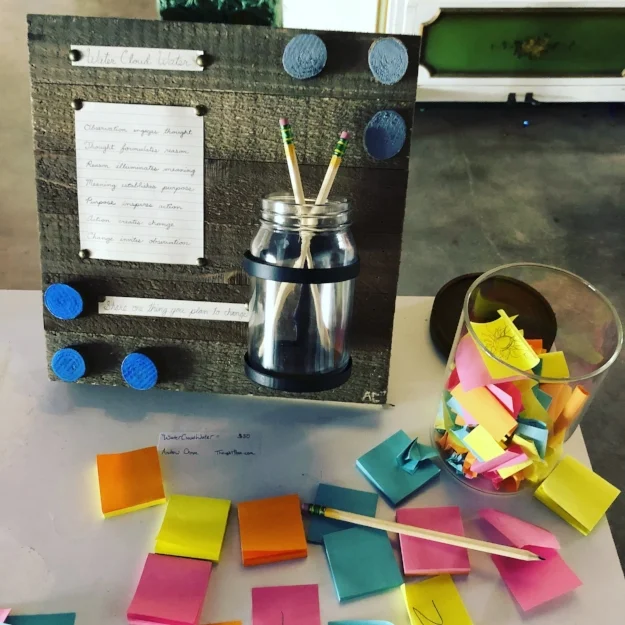
"WaterCloudWater"
"Share One Thing You Plan to Change"
I have this recurring dream about us all working together toward something big. It's always the same.
I picture two people sitting across from one another at a kitchen table. They're having an open, honest conversation. The ratio between speaking and listening remains mutually equal throughout the exchange. They eventually form a common understanding. They smirk, clink their coffee mugs together, and become friends.
The dream always ends there. It's fucking sweet.
Anyway, I like poetry, so I wrote one about what that conversation could be, if we all could somehow have it together:
WaterCloudWater 1105172100
Observation engages thought
Thought formulates reason
Reason illuminates meaning
Meaning establishes purpose
Purpose inspires action
Action creates change
Change invites observation
I thought the poem came out ok, so I decided to show it at a local art show. It was an interactive piece so, along with the poem itself, I made a request to the audience:
Share one thing you plan to change.
Here are the responses I got from that request:
- Save all the damn dogs
- The way people with mental illnesses are perceived & treated
- My gender
- Level of openness to new energy
- My life
- Societal expectations
- My passion
- This
- My mental health. I have manic depression.
- FTW DON'T ASK ME 4 SHYT!
- Lives
- Bold action only
- Deep gratitude practice for all beings every day xoxo
- Sum bitch
- Job
- 💘
- My attitude about work
- Perspective
- Tha system
- Fake democracy
- I ❤️ Dick
- Tell me how you feel. I won't be mad.
- Sarah's sassiness
- Perception is everything
- Work ethic
- 💘 (different one)
- To thine own self be true
- Don't wanna change a thing, really... right now.
- Our comfort zone! Push the limits
- My self care
- The way that people interact with art!
- My inability to be vulnerable
- I want to make handmade, quality goods cool again
- Eat better
- Love myself more
- My underwear
- Habit
- Lose more control
- I am changing the way I view myself
- My mind
- Focus on myself and not compare myself to others
- Job
- Go Astros! 11-1-17
So regarding this conversation - the one at the kitchen table that I dream about - it seems to still remain internal for most.

Random Quotes from Random People - Nov '17 Edition
Memorable quotes can come from anywhere, apparently.
“Wine tastes better after stomping on some grapes.”
“If you hop a fence in a tuxedo, that’s art.”
“Life shouldn’t be about the pursuit of happiness. Sadness is just as good for you. Instead, make life about the pursuit of experience.”
“A bad day can last a month, but then it ends.”
“The best work that anybody ever writes is the work that is on the verge of embarrassing him, always.”
“Dude, thanks, but honestly I have no fucking idea what I’m doing. I’m just trying to figure my shit out. No idea, like at all. ”
“Hey Andrew - Just thinking about you and hoping you’re having a good day.”
I'll post more every month. Meantime, share some random quotes in the comments below!

The Last Act of Honor
Is compromise our last act of honor?

"The greatest way to live with honor in this world is to be what we pretend to be." - Socrates
Honor.
Honor is an enigmatic premise. With honor comes the responsibility, or perhaps burden, of maintaining one’s pride and integrity. This maintenance occurs within one’s mind, unbeknownst to an audience who’ve long dismissed the idea, deeming it as a selfish and/or stubborn act. In assuming an honorable stance, your decisions can sometimes dismiss other valuable characteristics, such as reason and compromise. Honor is a stern distinction. It doesn’t budge from its stance, or bend its truth. It lives in the black and white, while most of us have evolved to blur the lines, and live amidst a foggy, more forgiving haze of grey. We consider this grey area to be acceptable in today’s society.
We are a society, after all. While honor is true, it is merely true to the self. We are a people, but we are individuals, each with our own legacy and laws to abide by. Honor is built from the roots of our ancestor’s principles. But, over time, these roots have tangled outwards from their origin; forging different paths, breaking off and falling from their birthplace, only to become new roots with new paths in new birthplaces.
We now live in a vast forest of varying truths.
Because we all form our own respective codes to live by, we must reason with one another when faced with conflict. Otherwise, we would constantly be at war with not only each another, but also ourselves. So the grey has become common ground for us all to amicably reside within, offering each other an understanding. We communally agree that honor’s truth must be allowed to bend, that its stance must be allowed to budge, in the name of individuality.
However, in doing so, what happens to the nature of truth?
In choosing to compromise, we are essentially changing the rules of our honor which, as it seems, violates the very idea of honor itself. We can exist in the grey. Our honor, however, truly cannot. Yet, perhaps, the act of compromise could be considered an honorable one. Perhaps compromising, both individually and collectively, is our last demonstration of honor, as we allow the white to give way to the black, and blend into an irreversible, undefined grey fog. In compromise, we dismiss our honor, thus dismissing ourselves to become a people.
But are we less at war with one another? Are we less at war with ourselves?

Biocentrism Says Existence Is a Matter of Perception
If you are not there to observe it, does it exist?

“Without consciousness, space and time are nothing.” - Robert Lanza
As maniac as this idea may seem, it stands as a relatively popular theory known as biocentrism, or the theory of everything. It’s the idea that consciousness is responsible for the existence of the universe, not the other way around as physics would have you believe.
As all that we know from physics continues to yield more questions than answers, medical doctor and scientist, Robert Lanza, has presented this new way to approach the “why?” question. His theory of everything places biology first, suggesting that the “web would not exist without the spider.” A shared consciousness, which kindles our collective web of all things known, is responsible and necessary for the existence of the universe and, without this shared consciousness, there would simply be nothing.
From a different angle, this notion could be explained by suggesting that things don’t exist unless you are there to observe them. This has been countlessly demonstrated by the famous double-slit experiment, in which entangled particles only present themselves as identifiable when they are observed. When they are not observed, they do not exhibit any unique properties within any specific orientation of space and time, but rather present themselves as a wave with infinite possibility across all of space and time.
Through physics, we’ve made significant progress in understanding the nature of our universe. Matter is studied as we track its motion and behaviors, and various physical theories are put to the test against the laws we’ve mostly come to accept. And while this scientific method can allot a certain level of confidence to its known facts about the nature of our universe, it must insist that no scientific fact be considered an absolute truth.
Even science admits that the very nature of truth is a matter of perception, and thus can never be absolute.
This fact - that there are no facts - also presents a problem for the theory of biocentrism, and it all comes down to the “truth” about space and time. Biocentrism regards both space and time as mental tools that we use collectively to form a frame of reference for our existence, rather than regarding them as physical objects that can be measured. If you can’t measure space or time, then you can’t prove that they exist, or that anything exists within their respective boundaries, including the theory of biocentrism.
It’s funny and ironic to think that nothing is true yet, as you observe it to be, it is.
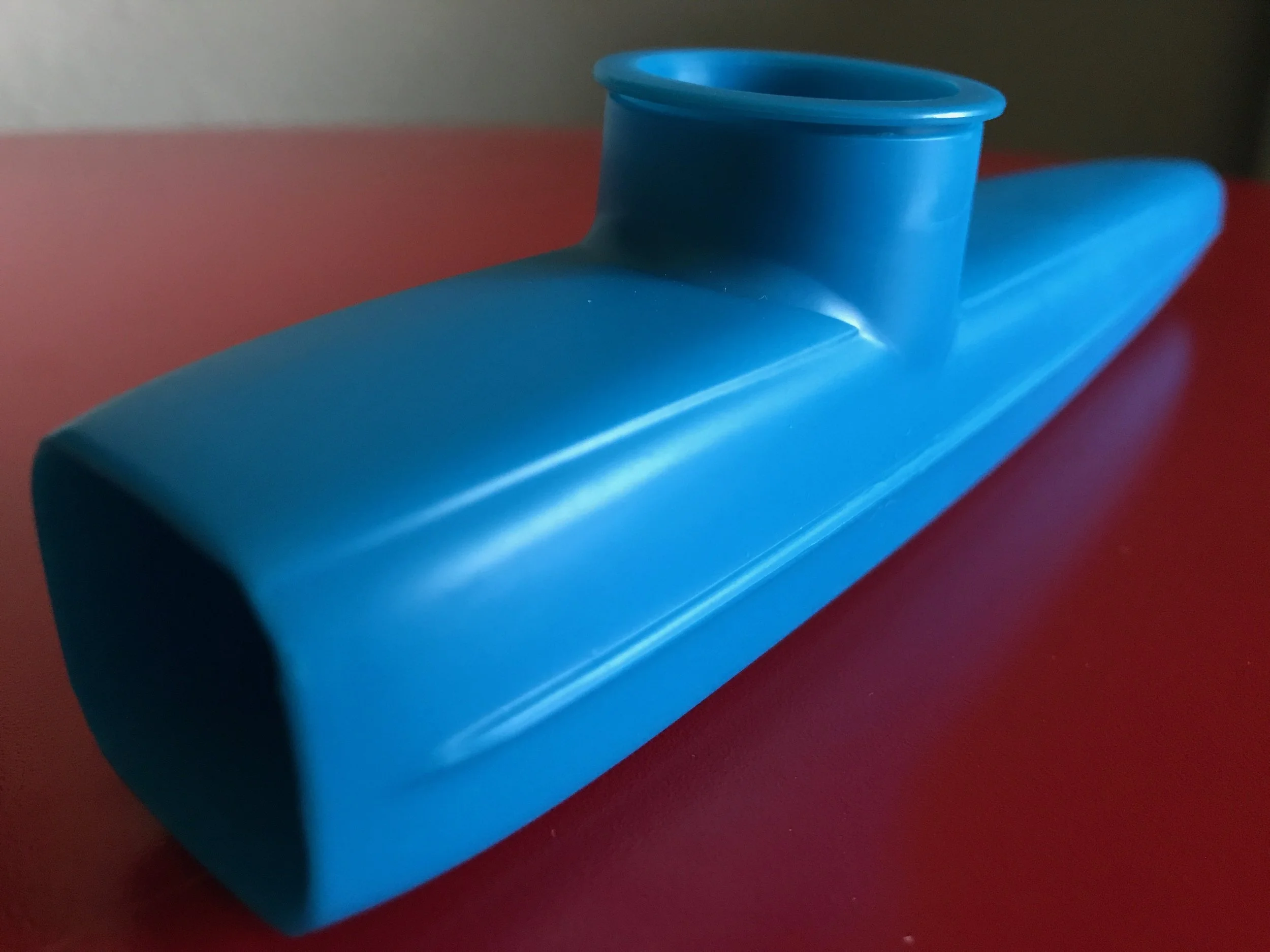
The Kazoo, and Vulnerability
Exploring the surprising, hidden lesson that kazoos have to offer.
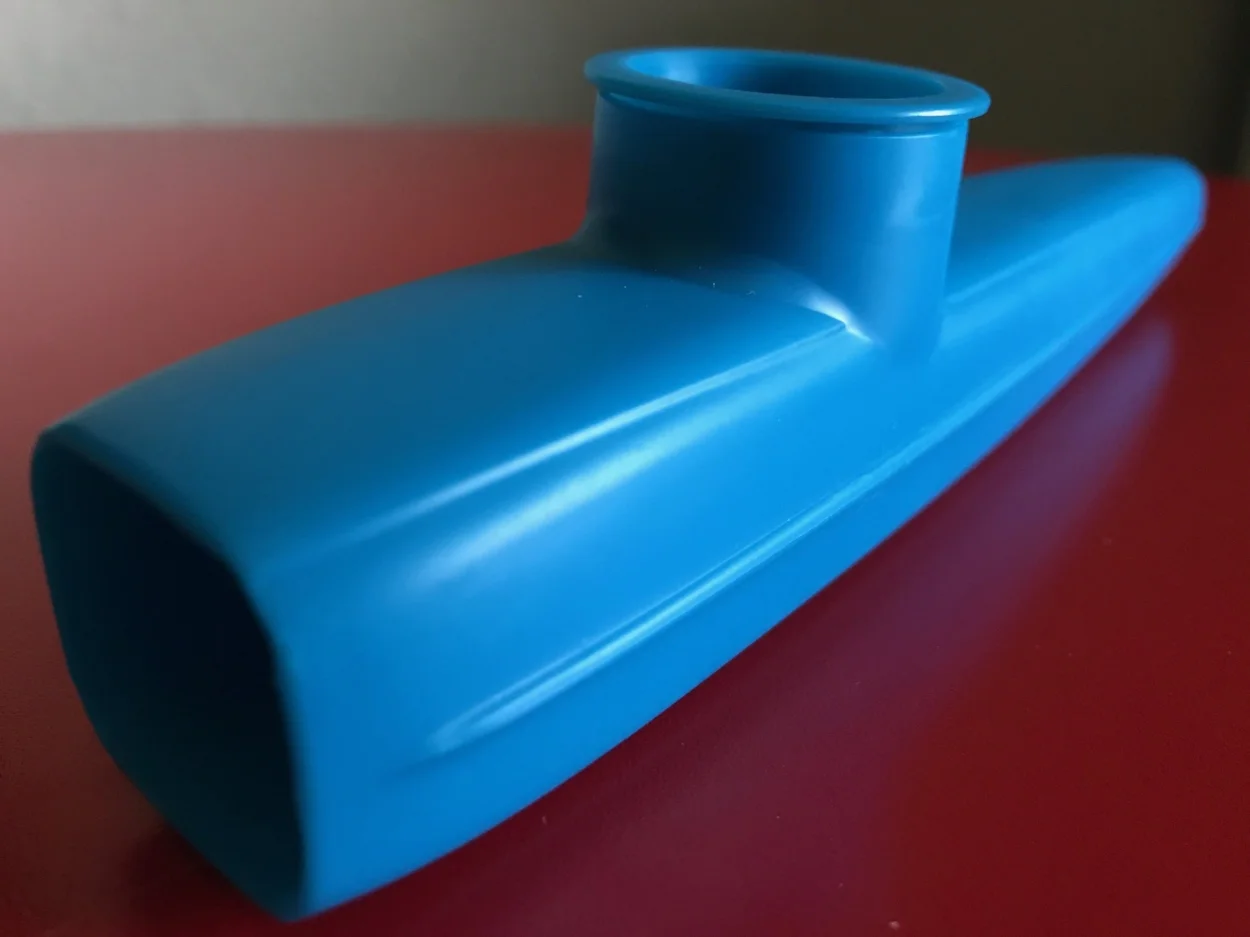
Kazoos rule.
For those of you who are unfamiliar, the kazoo is a musical instrument that muffles the tone of your voice via basically wax paper, creating a wacky, buzzing sound as you sing or hum through it.
There are a couple of interesting things happening here, with the kazoo. First and foremost, it has a fun name.
Secondly, the kazoo essentially acts as a filtering system for your voice. Let’s compare this with another popular voice-filtering system - auto-tune. Auto-tone is a win-win for both the performer and the audience. While the performer gets a wall of protection from needing any sort of skill or vulnerability, the audience gets neat, robot-y sounds. The kazoo provides none of these things. To play, it requires an about-as-expected amount of skill, and a surprising amount of vulnerability. One might argue that the kazoo requires even more vulnerability than if you were to just sing with your own voice #nofilter, because of how annoying it sounds to the audience (the kazoo, that is).
If this is starting to sound like one of those kazoo diss blogs, rest assured that it’s not. Quite the opposite, in fact. This is about the kazoo’s surprising, hidden potential to teach vulnerability. Not following? Here’s a challenge for you - complete the following three steps in order:
Play a song on the kazoo by yourself
Play a song on the kazoo to a friend
Play a song on the kazoo at a party
You probably won’t complete this challenge; it is kind of silly. But that's the point. Because if you did, you will have conquered vulnerability, and you will have helped make kazoos as cool as they deserve to be. Kazoos rule.

The Moment or the Memory?
What's more valuable - the moment itself, or the memory you have of it?

“Odd as it may seem, I am my remembering self, and the experiencing self, who does my living, is like a stranger to me.” ― Daniel Kahneman, Thinking, Fast and Slow
What's more significant: the moment itself, or the memory you have of it?
Nobel Prize winner and psychologist, Daniel Kahneman, who has been widely recognized for his work in developing Prospect theory, presents an interesting perspective on the relationship between the experiencing self and the remembering self. As you can probably deduce, the experiencing self describes the version of you who is present during life's moments as they happen, while the remembering self is the version of you who reflects upon these moments, which would then exist as memories.
Consider Daniel Kahneman's example of a one-week vacation vs. a two-week vacation. To the experiencing self, assuming that the second week was just as good as the first, a two-week vacation would seem to be twice as good as a one-week vacation, right?
However, when asking the remembering self to compare these two scenarios and determine which is better, the factor of "time spent" seems to play much less of a role. According to Daniel Kahneman, the factors that are actually in play here, as with any memory, are the changes, the significant events and the ending. These are the elements that make up our memories, and determine how we feel when we reflect upon them. So in this sense, in terms of its contribution to overall happiness, the one-week vacation suddenly seems just as good as the two-week vacation, and perhaps more practical.
"Inspired by true events" is a preface you'll often see at the beginning of a movie or book. But this preface is just as appropriate for each and every memory we've stored. When we recall one of these memories, we are not reliving the experience as it happened, but rather assessing the critical moments within the experience, and building a compelling story around the overall sentiment that these moments produced. The remembering self is the storyteller, while the experiencing self is just one of the characters within the story.
So, what's more significant: the moment itself, or the memory you have of it?

"Look Again at That Dot."
Let's take a closer look at this photograph of Earth, from Saturn's perspective.

Earth from Saturn, as captured by NASA's Cassini spacecraft in April of 2017
"Look again at that dot. That's here. That's home. That's us." - Carl Sagan, Pale Blue Dot: A Vision of the Human Future in Space
Take a moment to observe one of the many now-famous images captured by NASA's Cassini spacecraft, in which Earth was wondrously captured as the only source of light between the acting frame of Saturn's rings.
While this image may prompt thoughts of our sheer insignificance in the grand scheme of things, challenge yourself to examine this photograph from a different angle.
Consider just some of the many, many factors needed to sustain life on a planet, amidst the desolate and violent conditions of space: being the right distance from the sun to allow for water to melt, being in the “habitable zone” of the galaxy to avoid deadly radiation, having a near-perfect circular orbit to maintain consistent warmth and light, having a moon that creates tides, and so on. And, by the way, it doesn’t hurt to have “gas giant” neighbors, like Saturn, to attract asteroids and comets, often preventing them from reaching us.
As it seems, we just happened to be in the right place at the right time. Whether by luck, by fate, or perhaps by something we do not yet understand, behold life.
From the first microorganisms to the ~8 million species that now reside here, life on Earth has evolved over the years. Us humans, the luckiest of the bunch, have even grown to possess a heightened state of consciousness, for better or worse. That is to say we have the ability to do extraordinary things like imagine, perceive, and love.
Let this image of Earth pose a thought, not on insignificance, but on what can become of being in the right place at the right time. Whether by luck, by fate, or perhaps by something we do not yet understand, behold.

Two Things...
Two quick things to always keep in mind.
"Don't be an asshole, and there's more than just yourself." - Shane
This isn't a blog post. That's literally it.
Follow Shane's advice, and you should be fine.